
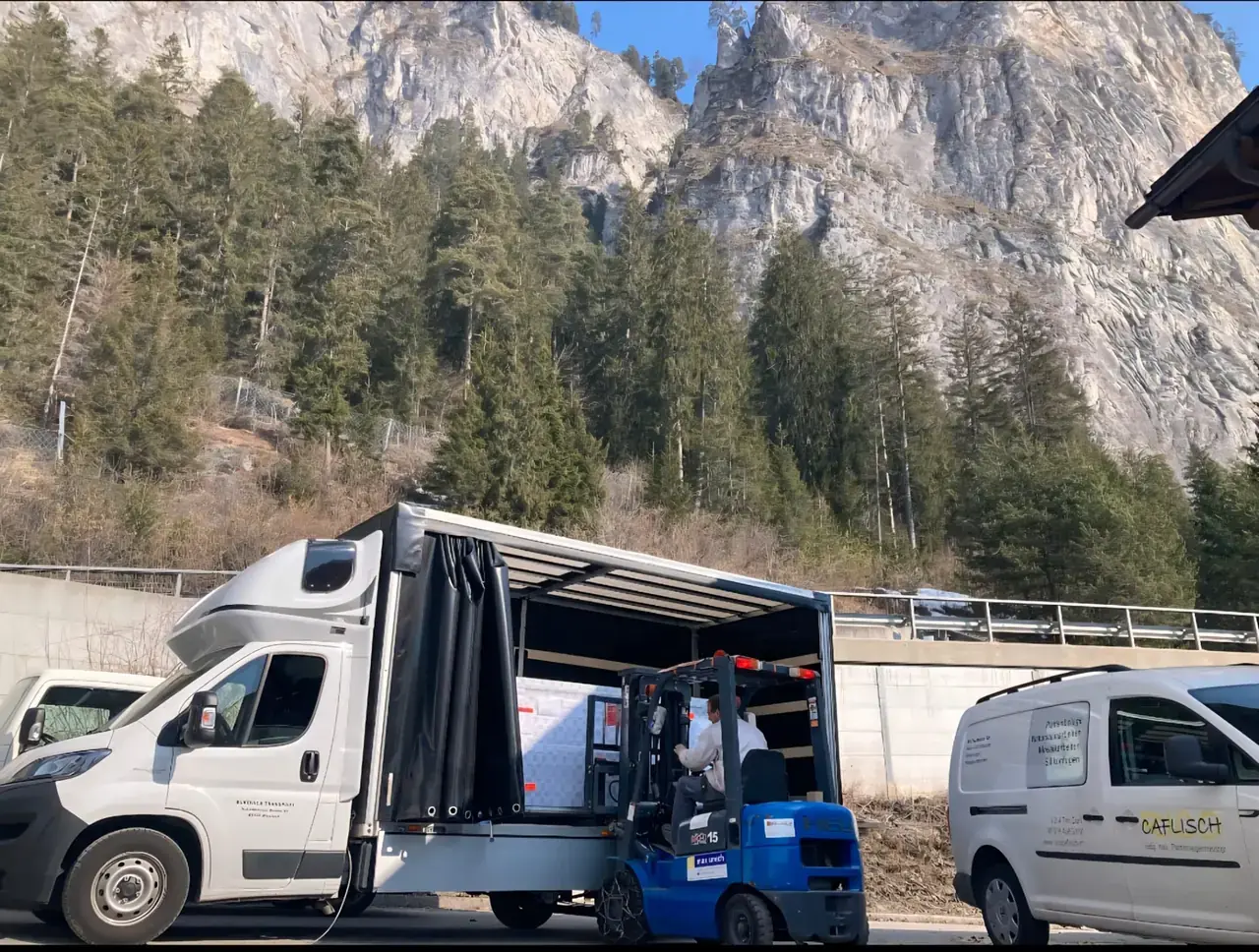
From a single pallet to a whole warehouse — the right carrier saves you both time and money, while the wrong one can cost far more than the price on paper. Here's what to look for before you book transport.
Van transport sounds simple — load, drive, unload. But anyone who has ever had goods stuck because of an undersized vehicle, an unexplained delay, or a "surprise" surcharge at the end knows that choosing a carrier is no small matter. The good news is that a reliable carrier shows a few clear signs. Here's how to spot them before it's too late.
First, assess what you're actually transporting
Before you compare a single price, you need to know exactly what you're sending. A carrier can't give you a serious quote based on "a few boxes". The more precisely you describe the cargo, the less room there is for nasty surprises on site.
- Dimensions and approximate weight of the goods.
- Whether the goods are on pallets or loose.
- Whether there are fragile, bulky or particularly heavy pieces.
- Whether there's a lift and how far the parking is from the entrance.
Vehicle capacity must match the cargo
The most common mistake is a vehicle that's too small — so the job is done in two runs, doubling the time and the cost. But an oversized vehicle isn't the answer either, because you pay for space you don't use. The right carrier will suggest exactly the right vehicle based on your description: from a smaller van for a few cubic metres to a large box truck for an entire warehouse.
A clear price with no fine print
This is where the serious carriers separate from the rest. Ask for a quote that clearly states what's included: mileage, loading and unloading, any carrying up stairs and waiting time. A suspiciously low price usually means the difference will be charged later, once you're cornered with no choice.
- Does the price include loading and unloading, or is that charged separately?
- How are waiting time and any additional addresses charged?
- Is there a surcharge for stairs or carrying over a longer distance?
- Are fuel and tolls included in the price?
Deadlines and reliability
Late goods can mean halted production, an angry customer or a missed deadline. A reliable carrier gives a realistic time and sticks to it, and if a delay happens — they tell you in advance, not after the arrival time has passed. Ask how they communicate during transport and whether you can get confirmation when goods are picked up and delivered.
Safety and responsibility for the cargo
What happens if something is damaged on the way? With a serious carrier the answer is clear and known up front. Ask whether the cargo is insured, how the goods are secured in the vehicle, and whether straps and protective covers are used. Goods rattling around an empty van are an accident waiting to happen — the right carrier never allows it.
For regular runs: arrange ongoing cooperation
If you need transport regularly — weekly delivery, supplying a shop, a fixed route — don't pay for every run as if it were the first. With a regular carrier you can arrange fixed terms, priority scheduling and a lower price per trip. Predictability is worth as much as the price itself, because you plan your business without worrying whether a vehicle will be free.
Red flags to watch for
Some things should stop you immediately. If a carrier avoids putting a price in writing, won't confirm a date, or is suspiciously cheap compared to everyone else — those are signs you'll probably pay the difference some other way.
- No clear quote even after several questions.
- Unwilling to take responsibility for the cargo.
- The price is "agreed on site".
- Poor or no references and impressions from past clients.
Conclusion
The right van transport isn't the cheapest on paper, but the one that knows exactly what it's carrying, gives a clear price, keeps to the deadline and treats your goods as its own. If you need reliable transport — from a single pallet to a complete warehouse move — get in touch with a description of your cargo and you'll receive a clear quote with no hidden costs.